
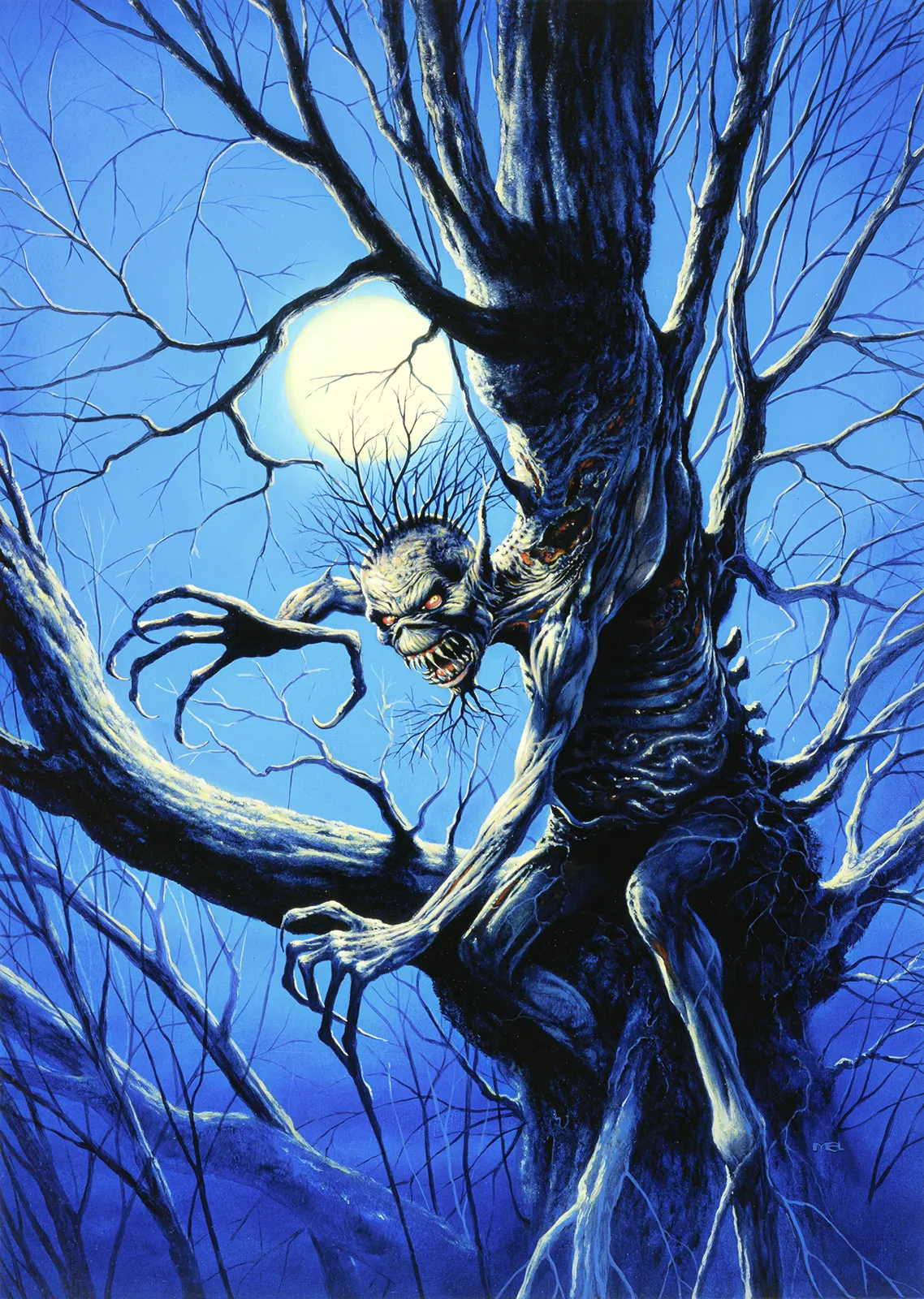
Iron Maiden
Fear of the Dark
Album artwork illustrated by Melvyn Grant — a psychological reimagining of Eddie, where suggestion and unease replace outright violence.
Sketches & Studies
Development drawings from the Fear of the Dark period — exploring mood, form, and alternate ideas that informed the final artwork.
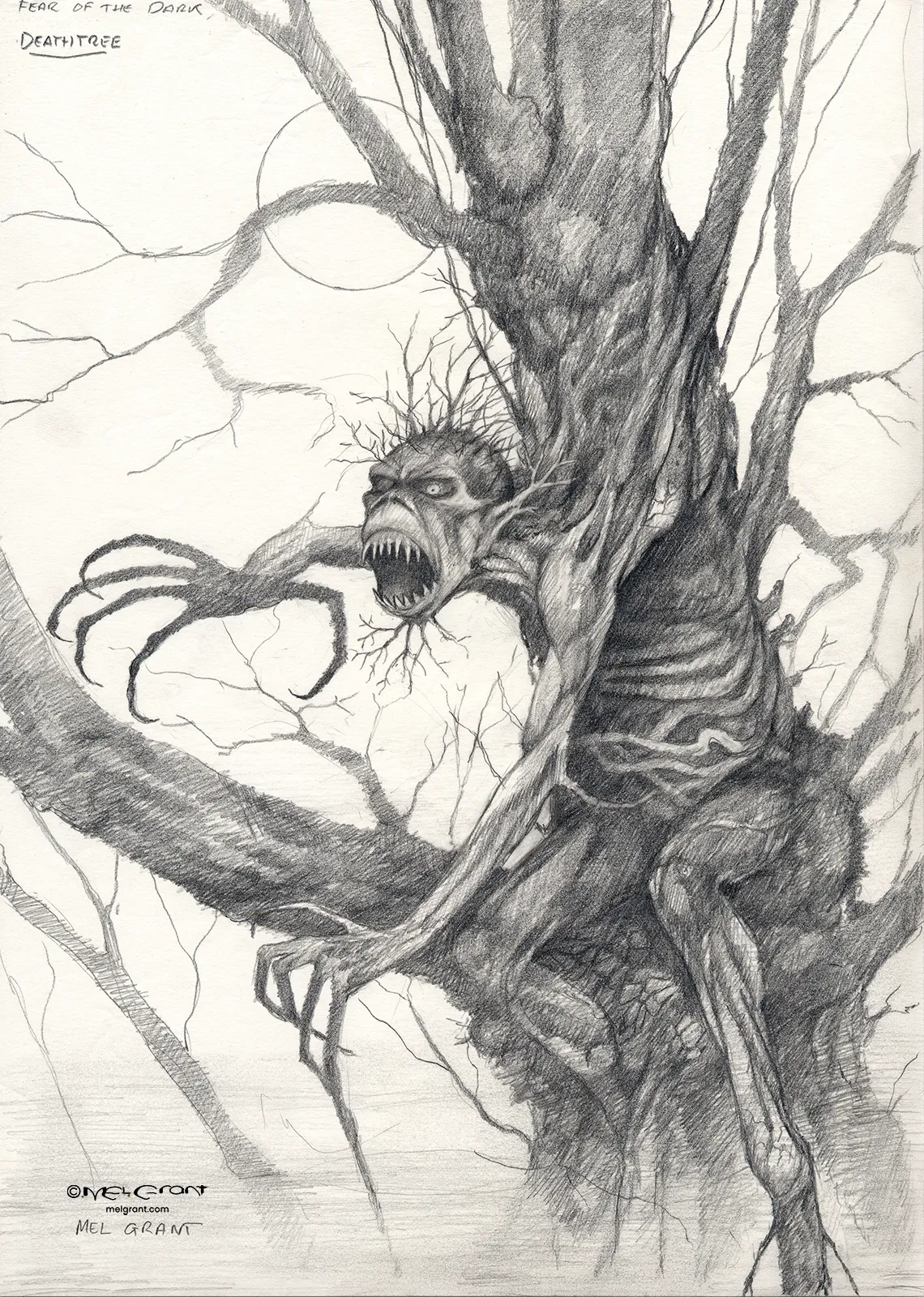
Early pencil study establishing the core concept of Eddie fused into the landscape. The figure appears both rooted and emerging, introducing the unsettling ambiguity that would define the final artwork.
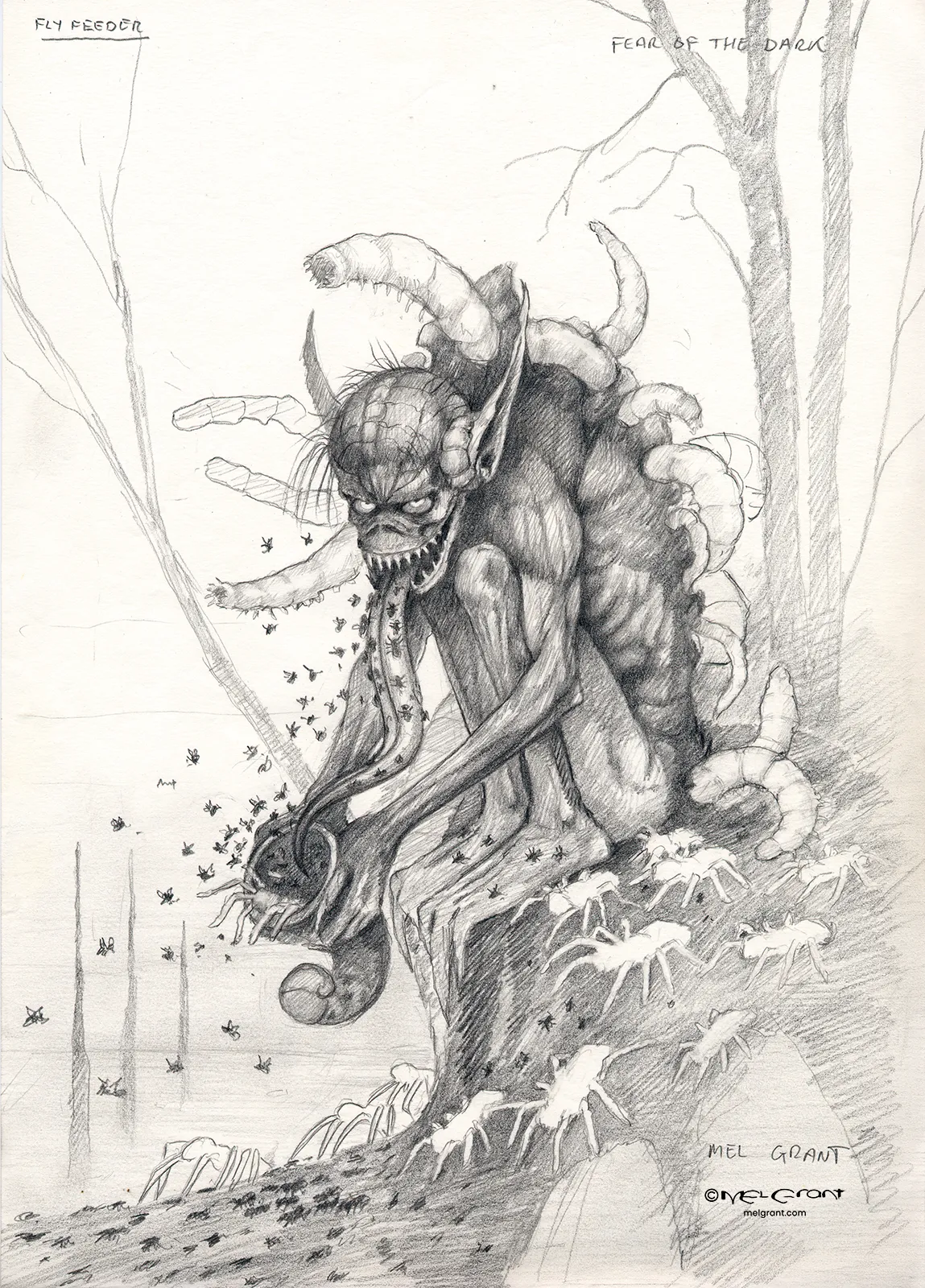
Exploratory sketch testing a more overt, winged interpretation of Eddie. This variation was ultimately set aside in favour of a subtler, more psychological presence.
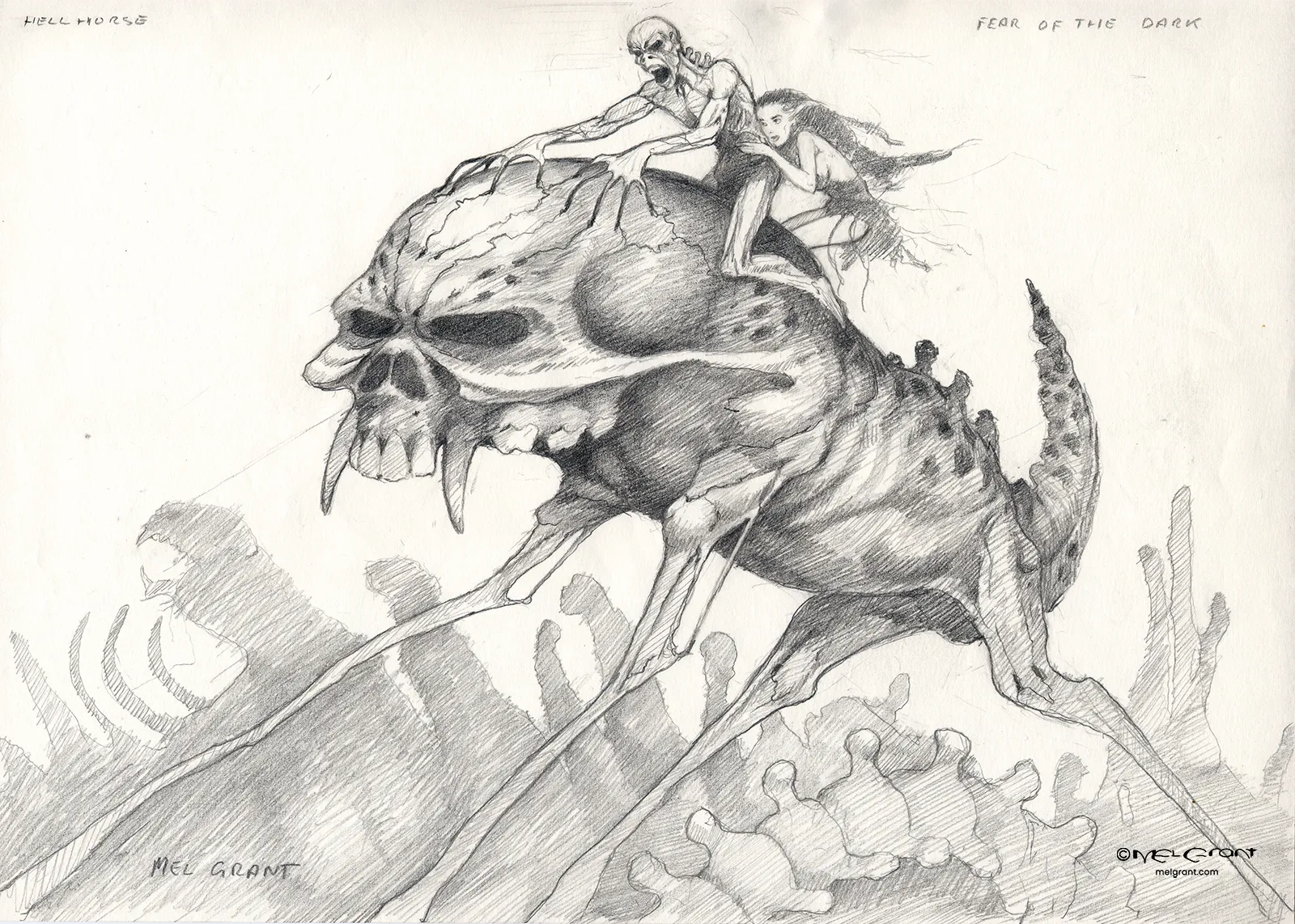
Exploratory drawing focusing on scale and narrative impact, depicting Eddie as a towering, alien presence carrying human figures. This study investigates dominance, vulnerability, and the unsettling imbalance between figure and rider.
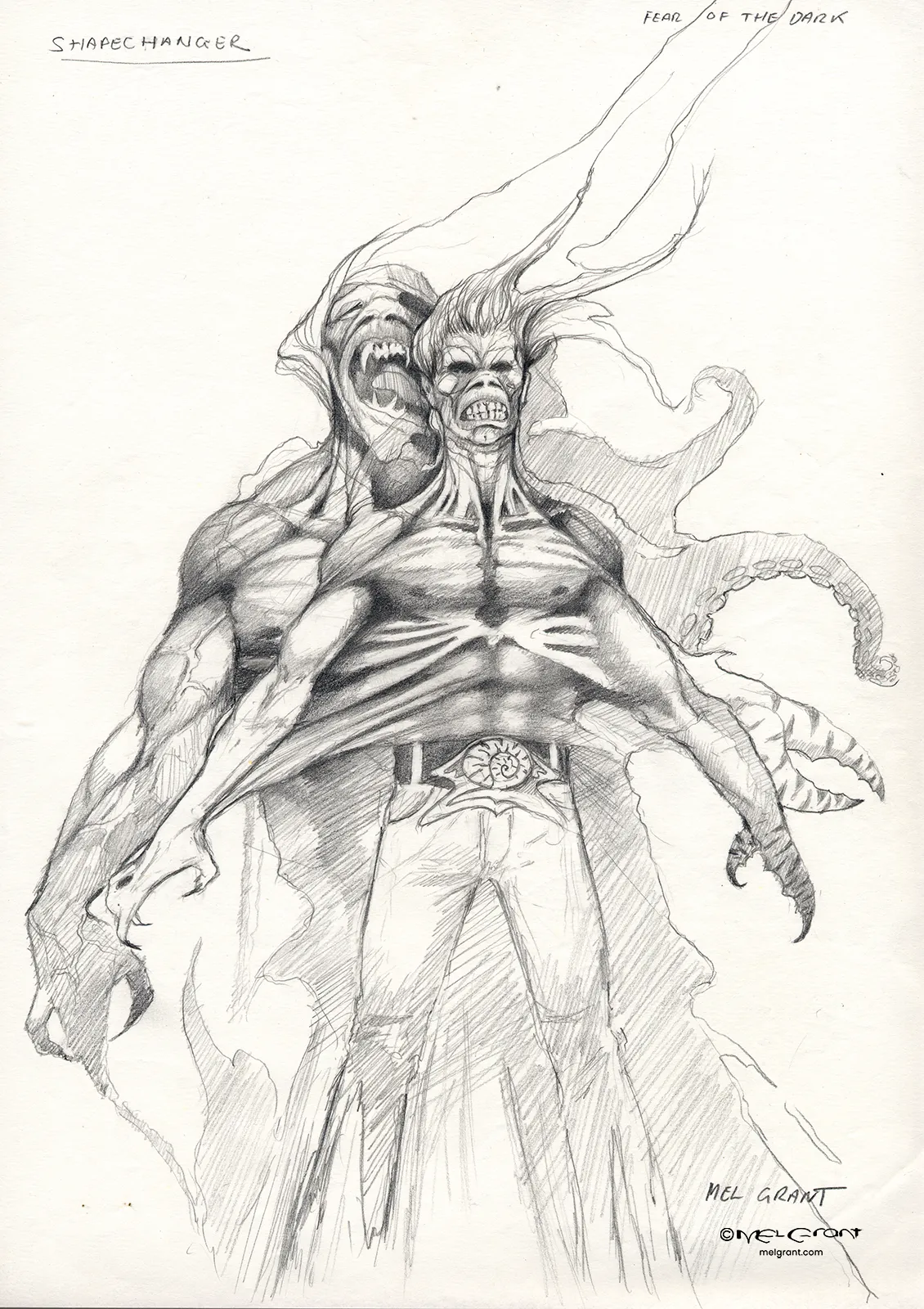
Development drawing exploring a darker, more grotesque direction. Although not used in the final artwork, it reveals the breadth of ideas considered during the Fear of the Dark design process.
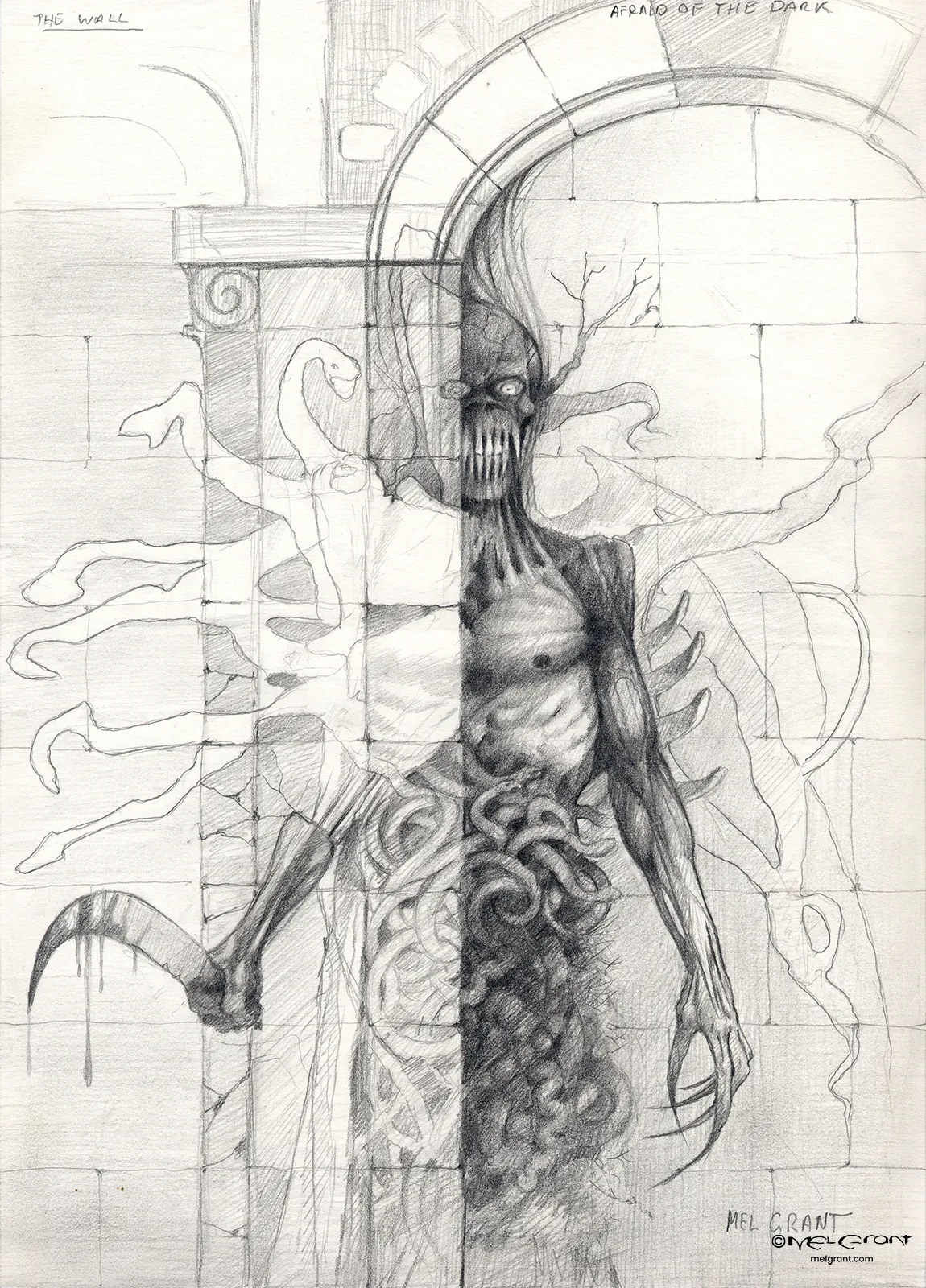
Concept drawing produced at Iron Maiden’s request, investigating internal structure and visual impact. This study helped inform later compositional decisions.
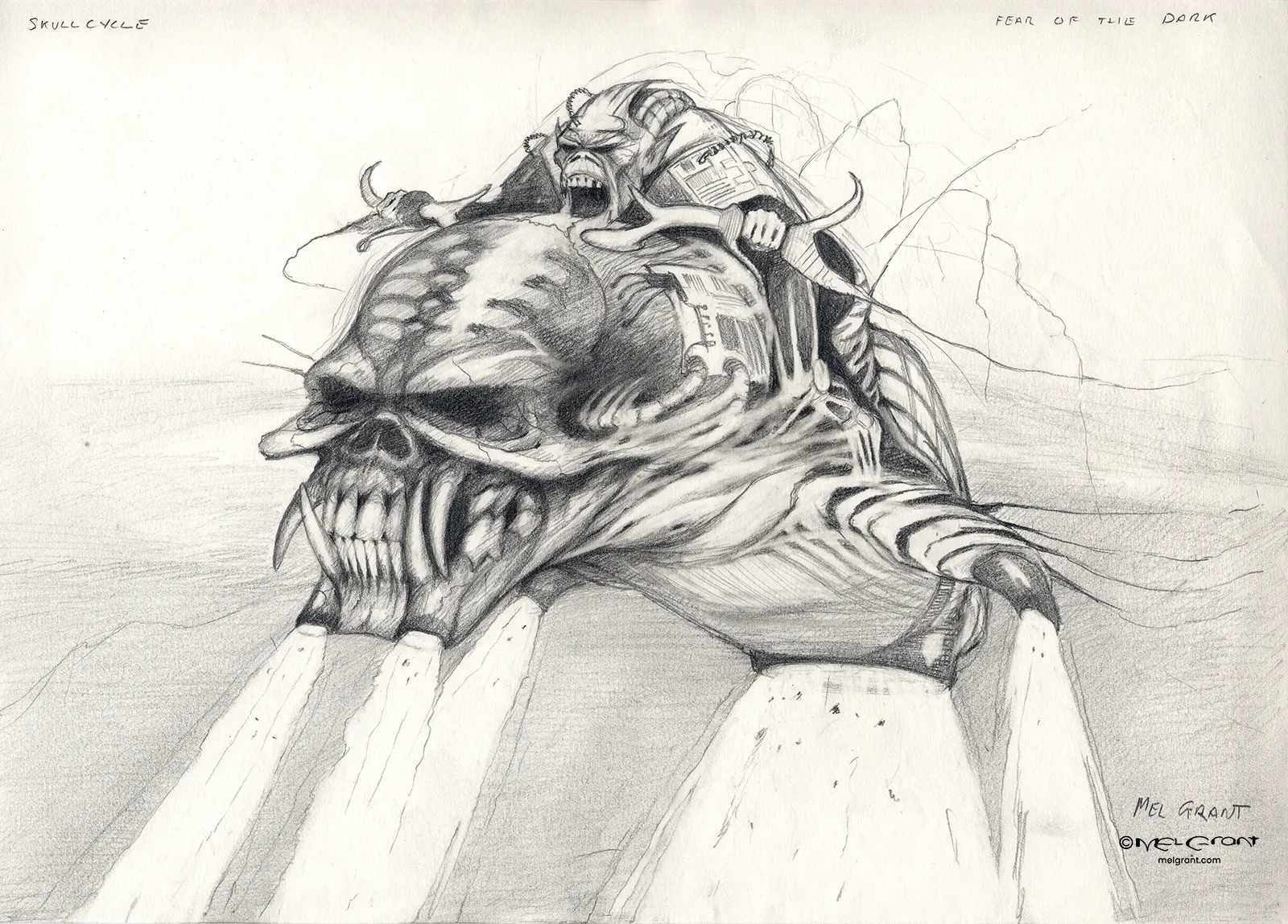
Pose and balance study exploring scale, movement, and overall visual weight. Used to test how Eddie would dominate the scene prior to final paint.